
Scaffolding and Mobile Tower Accident Claims in Scotland

Scaffolding and Mobile Tower Accident Claims in Scotland Contact Us Scaffolding is supposed to be the safe option. It gives trades a proper platform with guard rails, so they don’t have to balance on ladders or roof edges. When it’s designed, built and inspected properly, it does that job well. When it isn’t, it can fail badly. A missing guard rail, a board that tips, a tower that topples as it’s moved: each can mean a fall onto hard ground below. You’ll see scaffolding everywhere in Scotland, from stonework repairs on Glasgow’s sandstone tenements to granite restoration in Aberdeen and new-build housing estates across the Lothians. This guide explains what should happen and what you can do if you’ve been injured. Contact Us Read Our Guide Table of Contents How scaffolding accidents happen? The causes we come across most often are: missing or removed guard rails, often taken out by another trade and not put back gaps between boards or between the platform and the building unsecured or damaged boards that tip or snap overloading, with too many blocks or materials stacked on one lift poor access, such as unsecured ladders between lifts scaffolds altered by people who weren’t competent to do it weather damage, with high winds loosening ties or sheeting collapse caused by poor foundations, missing ties or bad design Scaffolders themselves face particular risks when erecting and dismantling, before the full protection is in place. Mobile tower accidents: Mobile aluminium towers are common on shopfits, warehouse jobs and indoor maintenance. They’re quick to put up, but only safe when used correctly. Typical problems include: towers built without the right parts or outriggers castors left unlocked towers moved with someone still on the platform towers used on uneven or sloping floors people climbing the outside frame instead of the built-in ladder guard rails left off the top platform Assembly training, such as a PASMA course, is widely expected for anyone putting up towers at work. What the law requires? The Work at Height Regulations 2005 set out detailed standards for working platforms. Guard rails. Where a person could fall, platforms need a top guard rail, an intermediate rail or equivalent, and toe boards. The regulations set minimum heights and maximum gaps so there’s no space to slip through. Competent people. Scaffolds must be erected, altered and dismantled under the supervision of a competent person, following a plan suited to the job. Inspection. A working platform used for construction, from which someone could fall two metres or more, must not be used unless it has been inspected in that position within the previous seven days. For a mobile platform, it must have been inspected on the site within the previous seven days. Inspections are also needed before first use and after anything that might affect stability, like storms or alterations. Results must be recorded. Since October 2013, a claim must show negligence rather than simply a breach of these rules. But a scaffold with no recent inspection record or a missing guard rail is strong evidence that reasonable care wasn’t taken. Who is responsible? You are the pursuer, and those you claim against are defenders. Depending on what went wrong, that could be: your employer, who has a duty to provide a safe place and system of work the scaffolding contractor, if the scaffold was badly designed, built or inspected the principal contractor, which must coordinate site safety and control who alters the scaffold another trade, if they removed a rail or overloaded a lift You don’t need to work out the exact split before starting a claim. Where more than one party is responsible, they can each be held liable for the full amount. Scaffolds also put people below at risk. If you were hit by a falling tool, fitting or board, see fallingobjectclaims.scot for how those claims work. What to do after a scaffold or tower fall? Get medical treatment and make sure the cause is noted. Photograph the scaffold or tower, especially any missing rails, boards or outriggers. Look for the scaffold tag and note the date of the last inspection. Get names of witnesses and the scaffolding company. Report it in the accident book, and ask whether the HSE has been told. Scaffolds are often altered or taken down quickly after an accident, so early photos really matter. Make a Claim Today Our reputation for excellence in personal injury law is unparalleled, having secured over £3 million in compensation for our clients. We are committed to achieving the best possible outcomes, consistently delivering exceptional results and ensuring our clients receive the justice they deserve. Free Claim Check Request A Callback 0333 3051 337 Compensation, time limits and no win, no fee Damages include solatium for your pain, suffering and loss of amenity, and financial losses such as lost earnings, care, travel and future loss of income. You normally have three years from the accident to raise proceedings under the Prescription and Limitation (Scotland) Act 1973. Claims up to £100,000 begin in the sheriff court. Higher-value claims can go to the Court of Session. Most scaffolding claims can be funded through a Success Fee Agreement. If the claim fails, you pay no fee. If it succeeds, the success fee is capped by law at 20% of the first £100,000, 10% of the next £400,000 and 2.5% of anything above £500,000, including VAT. In personal injury claims, outlays such as medical reports and court dues are generally met by the provider, apart from any after-the-event insurance premium. Your agreement will explain what you’ll pay. FAQs The scaffold tag was out of date. Does that help my claim? It can. An overdue inspection may be evidence that the scaffold wasn’t being properly checked. I’m a scaffolder and fell while erecting it. Can I claim? Yes, if your employer or the site failed to provide a safe method, training or fall protection during erection. Someone else took the guard rail off. Who’s to blame? Potentially that trade, the
Falls Through Roofs and Fragile Surfaces: Claims in Scotland

Falls Through Roofs and Fragile Surfaces: Claims in Scotland Contact Us From above, an old rooflight can look exactly like the sheets around it. Years of dirt, moss or a coat of paint hide it completely. Step on it and it gives way without warning. Falls through fragile surfaces account for 22% of all fatal falls from height in the construction industry, according to the HSE. In farming, roughly half of all deaths and serious injuries from falls involve work on fragile roofs. Many of the people hurt aren’t roofers at all. They’re maintenance workers, farm hands, electricians and surveyors doing a quick job. This guide covers how claims work after a fall from or through a roof in Scotland. Contact Us Read Our Guide Table of Contents What is a fragile surface? A fragile surface is one that won’t safely hold the weight of a person and anything they’re carrying. Common examples include: rooflights and skylights, especially older plastic or wired-glass panels non-reinforced fibre-cement sheets, including older asbestos-cement roofing corroded metal sheeting liner panels on built-up sheeted roofs glass, including wired glass slates and tiles in poor condition Scotland has a lot of these roofs. Think of the steel-framed sheds on farms across Aberdeenshire and Dumfries and Galloway, or older industrial units in Lanarkshire and the Central Belt. The HSE’s advice is to treat every roof as fragile until a competent person confirms otherwise. Other kinds of roof falls: Not every roof accident involves a fragile surface. Falls also happen: from unprotected edges, on flat roofs and pitched roofs alike through openings left uncovered during work at the eaves when climbing on or off from a ladder on steep slate roofs, such as on Glasgow and Edinburgh tenements, during chimney or gutter work in bad weather, when wet slates, moss or frost make the surface slippery What the law requires? The Work at Height Regulations 2005 contain a specific rule on fragile surfaces. Nobody should work on, pass across or work near a fragile surface where the job can reasonably be done another way. Where that isn’t possible, the employer must provide suitable platforms, coverings, guard rails or similar measures to support the weight and stop people falling through. Where a fall still can’t be ruled out, steps such as safety netting should be taken to reduce the distance and consequences. Fragile areas should be clearly signed. HSE guidance on roof work, known as HSG33, sets out how this should be planned. That includes doing work from below where possible, using a MEWP, and fitting covers or nets under rooflights. Since October 2013, the claim itself is based on negligence. But if your employer ignored these well-known precautions, it’ll be very hard for them to argue they took reasonable care. Who can be held responsible? You are the pursuer in a claim, and the party being claimed against is the defender. That’s usually your employer. Others can share responsibility too: the building owner or occupier, if they knew a roof was fragile and didn’t say so the principal contractor, on larger projects with several trades the client who arranged the work, if they failed to pass on what they knew about the roof Injuries from roof falls Falls through roofs are often from a significant height onto concrete or machinery below. Injuries are frequently serious: skull fractures and brain injuries, spinal cord damage, multiple fractures and internal injuries. Many people face long hospital stays, rehabilitation and permanent changes to their working lives. If you’ve lost someone in a roof fall, close relatives may be able to claim under the Damages (Scotland) Act 2011. What to do after a roof fall? If you or a colleague can, try to: photograph the roof, the hole and the area below note whether there were nets, covers, crawling boards or warning signs record who sent you onto the roof and what you were told check whether a risk assessment or permit was in place make sure the accident is reported in the accident book and to the HSE Roof falls are often investigated by the HSE. Its findings can be useful evidence. Make a Claim Today Our reputation for excellence in personal injury law is unparalleled, having secured over £3 million in compensation for our clients. We are committed to achieving the best possible outcomes, consistently delivering exceptional results and ensuring our clients receive the justice they deserve. Free Claim Check Request A Callback 0333 3051 337 Compensation, time limits and no win, no fee Damages in Scotland include solatium for pain and suffering, plus financial losses such as lost earnings, care, adaptations and future loss of income. You usually have three years from the date of the accident to raise court proceedings. Claims worth up to £100,000 start in the sheriff court. More serious claims can go to the Court of Session. Most fall from height claims can be funded under a Success Fee Agreement. There’s no fee if the claim fails. If it succeeds, the success fee is capped at 20% of the first £100,000 of damages, 10% of the next £400,000 and 2.5% above that, with VAT included. In personal injury claims, outlays like medical reports and court dues are generally covered by the provider, except for any after-the-event insurance premium. Your agreement will set out the details. FAQs I didn’t know the roof was fragile. Can I still claim? Yes. It was your employer’s job to identify the risk and protect you from it. I’m a self-employed roofer. Who would I claim against? Possibly the client, principal contractor or building owner, depending on who controlled the work and what they knew about the roof. The rooflight was painted over. Does that help my claim? It can. Hidden rooflights are a well-known hazard, so failing to mark or cover them may be evidence of negligence. Can I claim for a fall through a farm roof? Yes, if you were working for someone else or on someone else’s premises, and
Ladder Accident Claims Scotland | Fell From a Ladder at Work?

Ladder Accident Claims Scotland | Fell From a Ladder at Work? Contact Us Ladders look simple. That’s part of the problem. Because almost everyone has used one, they’re often handed out without a second thought, for jobs they were never suited to. Ladders aren’t banned at work. The HSE is clear that they can be a sensible choice for low-risk, short jobs. But when the wrong ladder is used, or the right one is used the wrong way, the results can be life-changing. Many of the fall injuries we hear about started with someone being told to “just grab the ladder”. Here’s what you need to know if you’ve been hurt in a ladder fall at work in Scotland. Contact Us Read Our Guide Table of Contents When should a ladder be used at work? Under the Work at Height Regulations 2005, employers must first ask whether the job can be done without working at height at all. If it can’t, they should use equipment that prevents a fall, such as a scaffold, tower or podium step. A ladder should only be chosen where a risk assessment shows that safer equipment isn’t justified because: the task is low risk, and it’s short duration. As a guide, the HSE suggests considering other equipment if you’d be on a leaning ladder or stepladder for more than 30 minutes at a time, or there are features of the workplace that can’t be changed So a quick visual check of a gutter might be fine on a ladder. Spending a full day fitting cladding from one isn’t. How ladder accidents happen? The same failures come up again and again: the ladder slips at the base because it wasn’t tied, footed or fitted with a stability device the wrong angle: too steep or too shallow. The usual guide is one unit out for every four units up damaged equipment: bent stiles, missing feet, loose or worn rungs domestic-grade ladders being used for trade work overreaching, often because the job needed a different piece of kit carrying heavy or awkward loads up the ladder, so you can’t keep three points of contact poor ground: soft grass, wet paving, ice or uneven surfaces no training on how to inspect, set up or secure the ladder Weather plays a part here too. Wind off the Firth of Forth or a sudden frost in the Cairngorms can turn a safe set-up into a dangerous one in minutes. Employers need to plan for that. What your employer should have done A careful employer will usually: carry out a risk assessment before choosing a ladder provide ladders designed for professional use, in good condition make sure ladders are checked before use and inspected regularly train staff to set up, secure and climb ladders safely supervise the work and step in if conditions change provide a better option, like a tower or MEWP, for longer or heavier jobs If any of those were missing, that may be evidence the employer failed to take reasonable care. Since October 2013, a claim needs to show negligence rather than just a breach of the rules. In practice, though, the regulations remain the benchmark. Who is responsible? In a claim, you are the pursuer and the party responsible is the defender. For most ladder falls at work, that’s your employer, and their employers’ liability insurer will handle the claim. If the ladder itself was faulty, your employer may still be responsible under the Employers’ Liability (Defective Equipment) Act 1969, even if the defect was the manufacturer’s. On shared sites, the principal contractor or the company that supplied the ladder may also share the blame. What about a fall at home? If you fell using your own ladder, there’s usually no one to claim against. But if a new ladder collapsed because of a manufacturing defect, a claim may be possible against the producer under the Consumer Protection Act 1987. Injuries from ladder falls Even short falls can cause serious harm. Common injuries include broken wrists from putting a hand out, fractured heels and ankles from landing feet first, back injuries, shoulder injuries and head injuries. Older workers in particular can suffer hip fractures that take a long time to heal. What to do after a ladder fall Get medical attention and tell the clinician exactly how you fell. Keep the ladder if you can, or photograph it. Damage to the feet or rungs is important evidence. Photograph the ground where the ladder stood. Report it in the accident book. Note witnesses and who told you to use the ladder. Make a Claim Today Our reputation for excellence in personal injury law is unparalleled, having secured over £3 million in compensation for our clients. We are committed to achieving the best possible outcomes, consistently delivering exceptional results and ensuring our clients receive the justice they deserve. Free Claim Check Request A Callback 0333 3051 337 Compensation, time limits and no win, no fee Damages cover solatium for your pain and suffering, plus financial losses like lost wages, care and treatment costs. You normally have three years from the date of the fall to raise proceedings under the Prescription and Limitation (Scotland) Act 1973. Claims up to £100,000 begin in the sheriff court. Larger claims can go to the Court of Session. Most ladder claims can be funded through a Success Fee Agreement. If you lose, there’s no fee. If you win, the success fee is capped by law at 20% of the first £100,000, 10% of the next £400,000 and 2.5% above £500,000, including VAT. In personal injury claims, outlays such as medical reports and court dues are generally met by the provider, apart from any after-the-event insurance premium. Read the agreement so you know what to expect. FAQs My employer gave me the ladder but I set it up. Is it my fault? Not necessarily. If you weren’t trained, or a ladder was the wrong choice for the job, your employer may be responsible. Any
How Fall from Height Claims Work: Scottish Legal Guide?
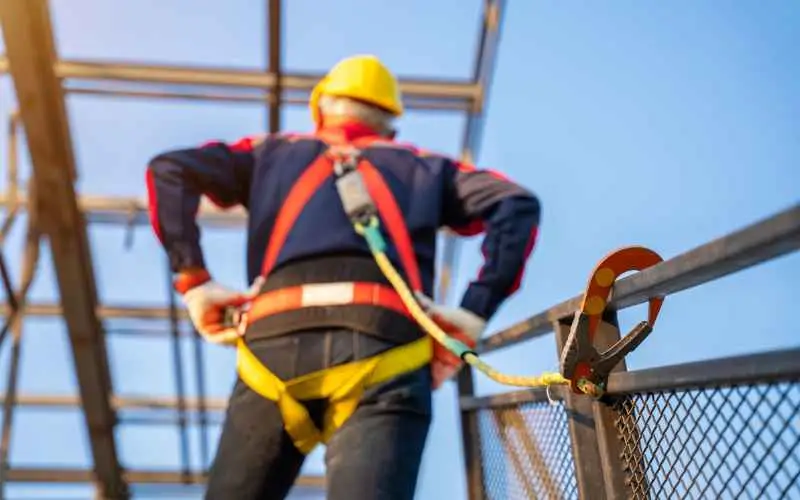
How Fall from Height Claims Work: Scottish Legal Guide Contact Us You don’t have to fall far to be badly hurt. A slip from the third rung of a ladder can break a wrist or an ankle. A fall from a roof edge or through a skylight can cause spinal injuries, brain injuries or worse. Falls from height are still the single biggest cause of work-related deaths in Great Britain. Provisional HSE figures show 31 workers died this way in 2025/26, around a quarter of all worker deaths. In construction, more than half of all deaths over the last five years were caused by falls. This guide explains how fall from height claims work in Scotland, who is responsible and what you can do now. Contact Us Read Our Guide Table of Contents What counts as a fall from height? In law, “work at height” means work anywhere a person could fall a distance liable to cause injury. There’s no minimum height. It doesn’t matter whether the drop is two metres or twenty. That covers a wide range of situations: falls from ladders and stepladders falls from or through roofs, including fragile rooflights and old cement sheets falls from scaffolding and mobile towers falls from mezzanines, loading bays and vehicle trailers falls through unguarded openings, hatches and stairwells falls from cherry pickers and scissor lifts falls into pits, trenches and inspection holes These accidents aren’t limited to building sites. We hear from warehouse staff, delivery drivers stepping off lorry beds, farm workers repairing shed roofs in Aberdeenshire, window cleaners, electricians, and maintenance staff in schools and hospitals. What the law expects of employers? The Work at Height Regulations 2005 apply to every workplace in Scotland. They set out a simple order of priorities: Avoid work at height wherever it’s reasonably practicable to do the job another way. Prevent falls using a safe existing place of work or the right equipment, such as scaffolds with guard rails, towers or podium steps. Minimise the distance and consequences of a fall where it can’t be prevented, using nets, airbags or harnesses. Work at height must be properly planned, supervised and carried out by people who are trained for it. Equipment must be suitable and checked. Since October 2013, you can’t claim simply because a regulation was broken. You have to show negligence: that someone failed to take reasonable care. But courts still look closely at these regulations when deciding what a careful employer should have done. Who can I claim against? You bring the claim as the pursuer. The person or company you claim against is the defender. In most work cases, that’s your employer. Employers must carry employers’ liability insurance, so the insurer usually deals with the claim. On shared sites the principal contractor, a scaffolding firm or another trade may also be responsible. Where you’re injured at premises you don’t work at, the occupier may be liable under the Occupiers’ Liability (Scotland) Act 1960. Members of the public can claim too. A shopper who falls from a poorly guarded mezzanine, or a tenant whose rotten balcony gives way, may have a case against whoever controls the property. Common injuries from falls: Falls tend to cause serious injuries. The most common we see are: fractured wrists, arms, ankles, heels and hips back and spinal injuries, including crushed vertebrae head injuries, from concussion to traumatic brain injury pelvic fractures shoulder and knee damage needing surgery Many of these mean months off work. Some mean you can’t return to the same job at all. What compensation covers? In Scotland, damages are made up of two main parts. Solatium compensates you for pain, suffering and the effect the injury has on your life. It’s based on the severity of the injury and how long it lasts. Financial losses include lost wages, future loss of earnings, care from family and friends, travel costs, adaptations to your home and the cost of private treatment where it’s needed. If a loved one has died after a fall, close family can claim under the Damages (Scotland) Act 2011. Time limits and where claims are heard You normally have three years from the date of the fall to raise court proceedings. This is set by the Prescription and Limitation (Scotland) Act 1973. For children, the three years start on their 16th birthday. Most claims settle without a court hearing. Those that don’t usually start in the sheriff court, often the All-Scotland Sheriff Personal Injury Court in Edinburgh. Higher-value claims can go to the Court of Session. Can I claim on a no win, no fee basis? Usually, yes. Most fall from height claims in Scotland are funded through a Success Fee Agreement. If the claim fails, you pay no fee. If it succeeds, a success fee is taken from your damages. The law caps it at 20% of the first £100,000, 10% of the next £400,000 and 2.5% of anything above £500,000, with VAT included in those limits. In personal injury claims, outlays such as medical reports and court dues are generally met by the provider, except for any after-the-event insurance premium. Your agreement should explain exactly what you’ll pay. Make a Claim Today Our reputation for excellence in personal injury law is unparalleled, having secured over £3 million in compensation for our clients. We are committed to achieving the best possible outcomes, consistently delivering exceptional results and ensuring our clients receive the justice they deserve. Free Claim Check Request A Callback 0333 3051 337 FAQs I only fell a short distance. Can I still claim? Yes. The rules cover any fall that could cause injury, whatever the height. My employer says I should have been more careful. Does that end my claim? No. If you were partly to blame, your damages may be reduced, but you can still claim. I’m self-employed. Can I claim? Often, yes, if someone else controlled the site, the equipment or the way the work was done. Do I need to report the fall?